Common Mistakes in Primary Science Fair Projects (and How to Fix Them)
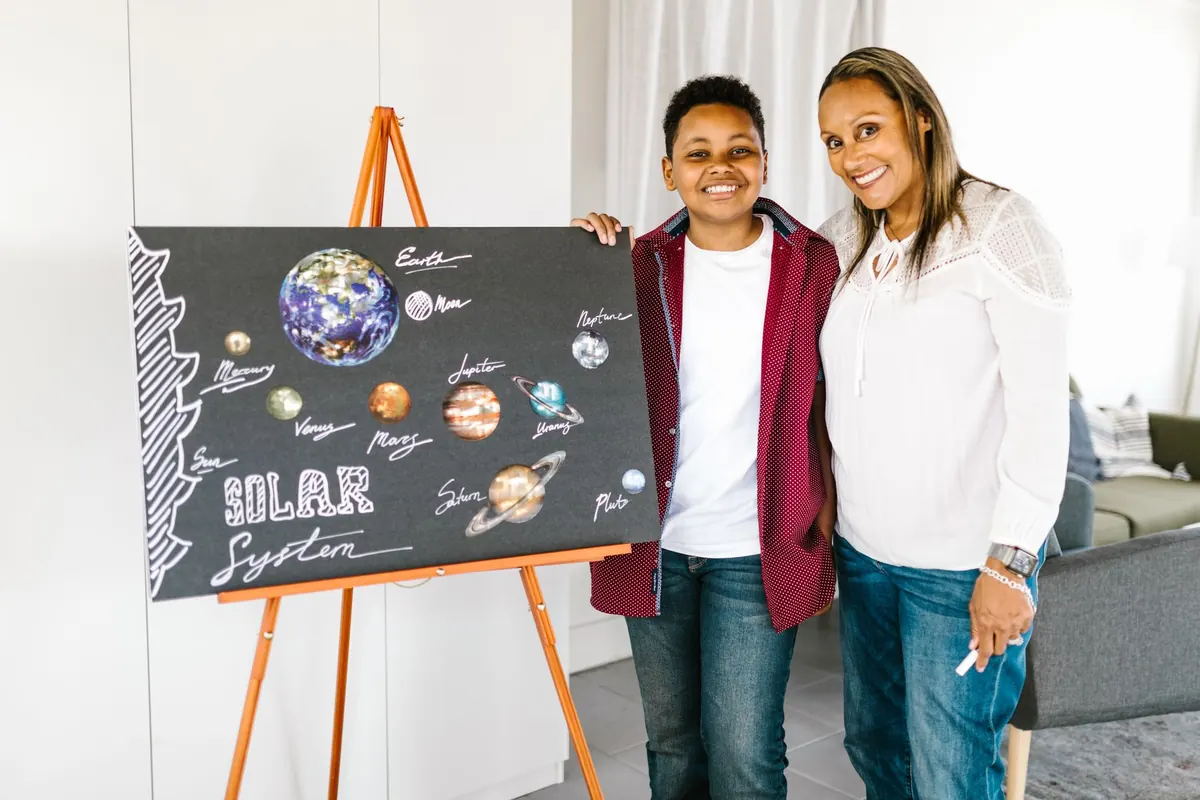
Two project boards can look almost identical and still be miles apart. One draws a crowd of children asking questions; the other gets a polite nod. The difference is rarely the topic — volcanoes, slime and cress seeds have all produced excellent projects over the years. It is the thinking underneath: a question that can genuinely be tested, a comparison that is fair, results recorded honestly, and a display that tells the story at a glance. Here are the traps primary projects fall into most often, and how to fix each one without taking the project out of your child's hands.
The question isn't testable yet
This is the single most common problem, and it usually hides behind a perfectly good topic. "How do volcanoes erupt?" sounds scientific, but it is a model to build, not a question to investigate. "Why do plants need water?" invites an explanation rather than an experiment. Both can be lovely projects, but they are demonstrations, and a science fair judge will spot the difference within seconds.
A testable question has something you can change and something you can measure. Try rewriting a topic into a "does" or "which" question:
- Why do plants need water? becomes Does the amount of water affect how tall cress seedlings grow?
- What makes a good paper aeroplane? becomes Does adding paperclips to the nose change how far a paper aeroplane flies?
- Which kitchen roll is best? becomes Which kitchen roll holds the most water before it tears?
The fix is usually a two-minute conversation. Ask your child: what will you change, and what will you measure? If they can answer both, the question is probably ready.
Variables with fuzzy edges
Primary children meet variables as "the thing you change, the thing you measure, and the things you keep the same". They often understand it in class and then muddle it on the kitchen table, usually because they are changing more than one thing at once, or because nobody has written the variables down.
We will change ______, we will measure ______, and we will keep ______ the same.
Fill that sentence in before any equipment comes out, and stick it to the wall. It is worth being strict about the "keep the same" list, too. If you are testing how light affects cress growth, then the amount of water, the type of seed, the size of the pot and the temperature all need to match. Write each one on the plan and tick it off as you set up. That tick list becomes a genuinely useful part of the display, because it shows the thinking, not just the result.
Fair tests that aren't quite fair
Unfair tests rarely happen on purpose. They creep in through small inconsistencies: one paper towel is torn slightly larger than the others, the second car is released from a different height, the stopwatch starts when someone shouts rather than when the marble leaves the ramp. None of this ruins the fun, but it does weaken the conclusion.
A two-minute fairness check
- Is only one thing different between the tests?
- Is there a "control" run where nothing is changed?
- Are the measurements taken the same way each time, by the same method?
- Were there at least three repeats, so one odd result doesn't take over?
- Was the equipment the same for every trial?
Repeats matter more than most families expect. Three goes at each condition, with the results shown separately or averaged, turns a lucky outcome into something believable. If a repeat goes wildly differently, don't hide it — note it and suggest why. That kind of reflection is exactly what strong projects look like.
Measuring and recording: the quiet deal-breaker
Results often get collected in a hurry and written up afterwards from memory, which is where accuracy quietly disappears. Draw the results table before the experiment, with a column for the change, a column for the measurement and a column for notes. Record in units — centimetres, seconds, millilitres — and keep to the same unit throughout. "Quite far" is not data.
Two habits make a real difference. First, write measurements down immediately, even the untidy ones. Second, photograph the setup and the messy in-between stages; a labelled photo of the ramp propped on three books explains more than a paragraph ever will. If the results come out against the prediction, that is a finding, not a failure — and it is often the most interesting part of the whole project.
Conclusions that stretch too far
"We proved that taller ramps make cars go further" is a sentence to avoid. Your child tested one car, one surface and one afternoon. A more honest and more impressive conclusion sounds like: "In our tests, the cars travelled further from the higher ramp. This might be because they had more time to speed up. Next time we would test a heavier car to see if the pattern holds."
That second version shows more scientific thinking than the first, because it separates what was observed from what it might mean. Encourage your child to add one line about what they would change or test next. It turns a finished project into an ongoing investigation, which is exactly the impression you want to leave.
Presentation pitfalls
A good board is readable from a step back and structured so a visitor can follow it without help. The usual offenders are huge blocks of text, decorative borders that leave no room for the data, graphs with unlabelled axes, and facts copied from a website and stuck on at the end because the board looked empty.
The order that works: title, question, prediction with a reason, method, results, conclusion, what we would change next time. Use headings in large handwriting, keep the text in short bullet points, and let the results table and graph take up real space. Let your child write the labels themselves, even if the letters wobble. A slightly wonky board in a child's own hand beats a flawless one that clearly belongs to an adult.
Finally, practise a sixty-second explanation. Children who can say what they changed, what they measured and what surprised them will handle any question a visitor throws at them.
What to do this week
Start with the question: read it aloud and check it contains something to change and something to measure. Then write the variables sentence, add the two-minute fairness check, and plan for three repeats. Before the board goes up, confirm it has all seven sections and that the graph has labelled axes and units. Keep the equipment handy for the fair itself — a jar of cress or a paper ramp on the table gives visitors something to touch and gives your child something to explain. Do that, and the project will stand out for the right reasons: clear thinking, honest results and a child who genuinely owns it.
Photo: RDNE Stock project / Pexels