Constellation Spotting for Beginners: A Seasonal Guide to UK Night Skies
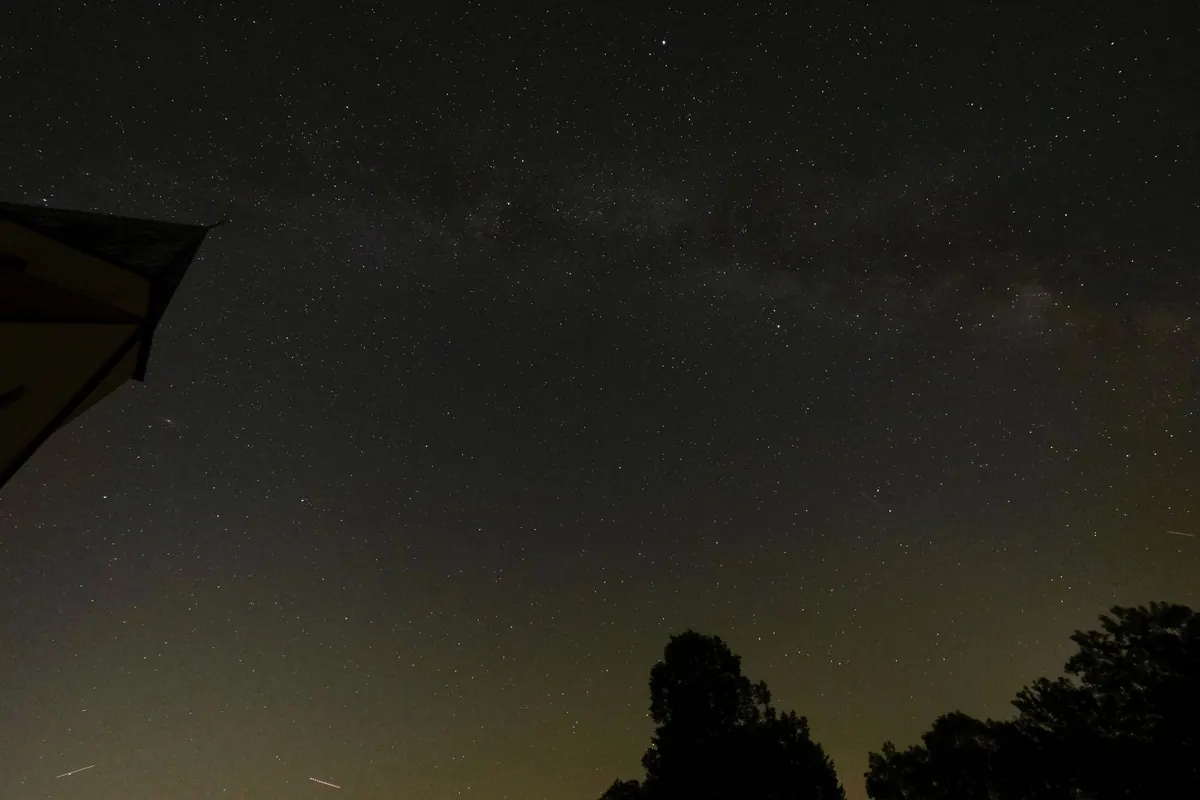
Good constellation spotting begins with a small, unglamorous act: turning off the light. You do not need a telescope, a dark-sky park or expensive equipment. A back garden, a park bench or a quiet lane with a clear view north will do, provided you give your eyes time to adjust and pick a night when the Moon is not washing out the sky.
The stars reward patience rather than kit. What follows is a season-by-season route through the constellations most easily seen from Britain and Ireland, plus a few habits that make the difference between seeing a scattering of dots and recognising an old friend.
Give your eyes a chance
Your eyes are the instrument. The problem is that they take time to work properly in the dark, and bright light resets the process completely. Follow these steps and a suburban garden becomes far more usable than most people expect.
- Allow twenty to thirty minutes for your eyes to adapt. Go out, then stay out. Checking a phone screen undoes most of that in a second.
- Use a red torch for charts or a notebook. A red light preserves dark adaptation; white light destroys it.
- Check the Moon phase before planning a session. The week around new Moon gives the darkest skies, and the Moon itself is one of the most rewarding beginner targets when it is up.
- Watch the forecast for a clear slot, especially after a cold front passes. British weather means grabbing an hour when it appears rather than waiting for a perfect night.
- Wrap up properly. Several thin layers, a hat and gloves will keep you outside far longer than one thick coat.
Find north, then the rest follows
Nearly every star chart assumes you know which way you are facing, so start with north and stay with it until it is automatic. The two stars at the outer edge of the Plough's bowl — Dubhe and Merak — point towards Polaris, the Pole Star. Polaris sits almost directly above the northern horizon at a height matching your latitude, so it climbs higher the further north you are.
Cassiopeia, the bright W-shaped constellation, sits on the opposite side of Polaris from the Plough and wheels around it through the night. If the Plough is low, Cassiopeia will be high. Use that pairing as a compass, and hold a printed planisphere above your head with north at the correct edge rather than laying it flat on a table.
Winter: Orion and its neighbours
Winter evenings belong to Orion, unmistakable in the south from about 9pm in January. Three bright stars form the belt, with orange Betelgeuse above one shoulder and blue-white Rigel below the opposite foot. Follow the belt down and to the left and you arrive at Sirius, the brightest star in the night sky. Follow it up and to the right and you reach Aldebaran, the orange eye of Taurus, with the Pleiades cluster a little further on.
Hanging from the belt is Orion's sword, where binoculars reveal the Orion Nebula as a soft grey smudge rather than a point of light. Above and left of Orion lies Gemini, marked by Castor and Pollux, and further left again is the bright pair of Procyon and Capella.
Spring: the Plough and the arc to Arcturus
By late March the Plough is high overhead in the evening, which makes star hopping easy. Trace the curve of its handle away from the bowl and you arrive at Arcturus, an orange star in the kite-shaped constellation Boötes. Continue the same arc and you reach Spica in Virgo. It is a neat, memorable line across the spring sky.
Below the Plough's bowl, look for Leo: a backwards question mark called the Sickle, with the bright star Regulus at its base, and a triangle of stars trailing to the east. Spring evenings also catch the last of Orion sinking in the west, a useful reminder that the whole sky drifts westward as the year turns.
Summer: the Summer Triangle and short bright nights
Summer nights are short, and in the far north of Scotland true darkness barely arrives around midsummer. Late July and August are the better months, and the reward is the Summer Triangle: Vega in Lyra, Deneb in Cygnus and Altair in Aquila, three bright stars spread high across the sky.
Cygnus, the Swan, flies along the band of the Milky Way, which runs from the north-east down towards the southern horizon. From a dark site it is a faint, grainy river of light; from a town you may only see the brighter patches. The Perseid meteor shower peaks in mid-August, and warm nights make it the easiest time of year to sit out and simply watch.
Autumn: Pegasus, Andromeda and the returning hunter
Autumn brings early darkness and a new set of landmarks. The Great Square of Pegasus stands high in the south-east, four stars forming a large, slightly wonky box. From its upper-left corner, follow a chain of stars into Andromeda and look for a faint elongated smudge: the Andromeda Galaxy, the most distant object visible to the unaided eye under genuinely dark skies.
Cassiopeia rides high near the top of the sky, and the Pleiades and Taurus climb in the east. By late evening in November, Orion is back above the horizon, and the cycle begins again.
Keeping a simple sky notebook
Five constellations learned properly are worth more than fifty half-recognised ones. Set aside one evening a week, step outside at roughly the same time, and write down the date, the cloud cover, the Moon phase and what you managed to find. After a month you will notice the same stars sitting further west; after a season, an entirely new set will have taken their place.
Binoculars, if you have them, will show the Pleiades as dozens of stars, the Orion Nebula as a glowing cloud and Jupiter as a small disc with moons beside it. Steady them against a wall or a fence post — hand-holding at 10x magnification is shakier than most people expect.
Above all, be willing to fail. Cloud interrupts, charts confuse, and some nights the sky wins. The people who learn the constellations are simply the ones who keep going back outside.
Photo: Jozef Papp / Pexels