Why Do Leaves Change Colour in Autumn? A Simple Explainer for Curious Kids
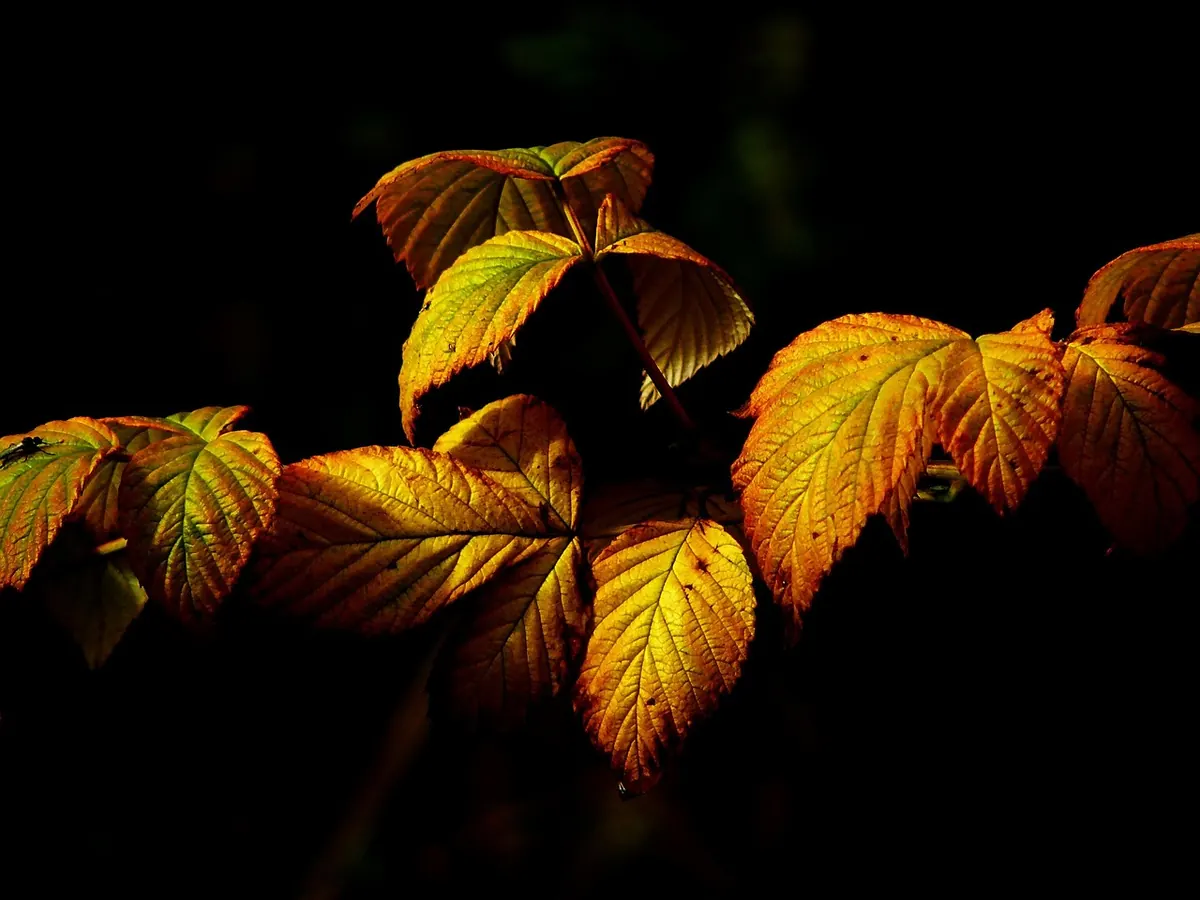
A green leaf in June looks like one colour. Hold a backlit maple leaf up in October and you will find yellow, orange and red hiding inside it — pigments that were there all along, waiting for the green to get out of the way.
Autumn colour is not something a tree adds. It is something a tree stops hiding. Here is what happens inside the leaf as the days shorten, and a simple experiment that pulls those hidden colours apart on a strip of paper.
Chlorophyll: the green that does the work
For most of the year a leaf is a solar panel the size of your thumb. Chlorophyll molecules absorb red and blue light and reflect green back at your eyes, which is why a healthy leaf looks green rather than black. Making chlorophyll is not free: it takes water, light and nitrogen drawn up from the soil, and the tree rebuilds it constantly through spring and summer.
In autumn the tree stops investing. Daylight shortens, the air cools, and chlorophyll is dismantled piece by piece so its nitrogen can be stored in the trunk and roots for next spring. Green is the first colour to go, and the veins often hold on longest. At the same time the tree seals the base of each leaf stalk with a corky layer, cutting off the water supply. The leaf dries, loosens in the wind and falls. By the time it lands on the pavement, the chemistry is finished.
The yellows were there all along
Carotenoids have been sitting under the green since spring. They are the same family of pigments that makes carrots orange and sweetcorn yellow, and they are not dead weight: they help the leaf cope with bright light and mop up the harmful molecules strong sunshine can create.
Once chlorophyll breaks down, they show themselves. Birch, ash, horse chestnut and most sycamores turn a clean butter yellow with barely a trace of red. Oaks follow a different recipe — much of their russet comes from tannins, which stay in the leaf as other pigments fade. Dull brown is not a failed autumn. It is simply what an oak does.
Reds and purples are made to order
Anthocyanins are the odd ones out, because the tree builds them fresh in autumn rather than revealing something already there. They are made from sugars still trapped in the leaf after the transport routes have begun to close.
That is why red is so hard to predict. Bright sunny days and cool nights — but not a hard frost — tend to give the strongest reds, because sugar stays put and sunshine drives the chemistry. A grey, wet October usually delivers yellows and browns instead. Maples, sweetgums, dogwoods and many ornamental cherries are the reliable performers.
Why a tree spends energy on red pigments it is about to throw away is still an open question. One idea is that anthocyanins act as a sunscreen, protecting the leaf's remaining machinery long enough for the tree to recover nutrients. Another is that they help with cold and light stress. Neither explanation has been settled, and it is worth saying so: some autumn questions do not have tidy answers yet.
Why the same tree looks different every year
Two things shape what you actually see: the tree and the weather.
Species comes first. A field maple turns gold, a Japanese maple turns scarlet, a beech holds copper leaves for months. After that it is local conditions — how much sun the spot gets, how wet the soil is, how cold the nights turn. A tree on a north-facing slope can be a fortnight behind one on the sunny side of the same street. If a tree near you seems late this year, look at the other side of the road before blaming the weather.
Try it yourself: leaf chromatography
Chromatography separates pigments by how far they travel up a paper strip in a solvent. The lighter and more soluble ones race ahead; the heavier ones stay low. It takes about an hour, and it needs an adult nearby, because the solvent is flammable.
You will need
- a handful of fresh green leaves — spinach from the fridge works well
- isopropyl alcohol (rubbing alcohol) or nail varnish remover
- a clean jam jar with a lid
- a strip of coffee filter paper or thick blotting paper, roughly 2 cm wide and 10 cm tall
- a pencil, scissors and sticky tape
What to do
- Tear the leaves into small pieces and drop them into the jar. Add just enough alcohol to cover them.
- Stir, then leave for 20 to 30 minutes until the liquid turns deep green.
- Draw a pencil line about 2 cm from the bottom of the paper strip. Pen ink runs, so stick to pencil.
- Dip the very bottom of the strip into the green liquid. Keep the liquid level below the pencil line, and tape the top of the strip to a pencil laid across the jar so it hangs straight.
- Wait 20 to 40 minutes. The alcohol climbs the paper, and the pigments climb with it at different speeds.
- Lift the strip out, let it dry, and mark the bands with pencil before they fade.
You should see an orange-yellow band near the top, a bright green band below it, and a duller yellow-green band below that. The yellow was in the leaf all along. If the bands blur together, the liquid had too far to climb or was left too long — start again with fresh leaves. Pale or yellowing leaves give weak results, so pick green ones.
Reds need a different trick. Anthocyanins dissolve in water rather than alcohol, so chop red cabbage or a red maple leaf into hot water and leave it to cool. Once the liquid is a strong colour, test it: a drop of vinegar keeps it pink, while a pinch of bicarbonate of soda turns it blue-green. Same pigment, different acidity.
Keep the alcohol away from flames, work in a ventilated room, and wash your hands afterwards. Leftover solvent goes back in the bottle with the lid on, not down the sink.
What to look for on your next walk
Photograph the same branch every few days and the order becomes obvious: green fades, yellow appears, red arrives last and often on the sunniest side of the tree. Turn a fallen leaf over and follow its veins — the tissue between them usually changes colour first.
Then pick up a leaf you cannot identify and ask the chromatography question: which pigment am I actually looking at? Autumn colour is a shutdown, not a decoration, and once you can name the pigments involved, an ordinary street in October turns into a slow chemistry lesson.
Photo: cocoparisienne / Pixabay