British Garden Bird Identification: A Beginner's Guide to 10 Common Species
British Garden Bird Identification: A Beginner's Guide to 10 Common Species
A garden can seem quiet until you learn what to look for. A flicker in the hedge, a thin call from the top of the apple tree, a blackbird turning leaves on the lawn: these are all clues. You do not need expensive kit or a trip to a nature reserve. Binoculars help, but your ears and a notebook will take you a long way. This guide covers ten birds you are likely to meet in a British garden, what they look like, what they sound like, and how to keep a simple record of what you find.
Start with shape, size and movement
Before you worry about colour, notice the silhouette. A robin is round and upright, often alone on a low branch. A blue tit hangs upside down at the end of a twig. A wood pigeon is bulky and slow, while a wren is tiny, brown and usually carries its tail cocked. Size is easier if you compare each bird to something familiar: smaller than a sparrow, about blackbird-sized, or pigeon-sized. Behaviour matters too. Does it hop or walk? Does it feed on the ground or cling to a feeder? Does it flick its tail? Light can change how colours appear, so shape and habits are more reliable than a flash of red or yellow.
Try a simple exercise: choose one window and watch the same patch of lawn, feeder or hedge for five minutes. Write down only what the bird is doing, not what you think it is. “Small brown bird, creeping up a tree trunk” is more useful than a guess. Over time, you will begin to recognise individuals and routines. The bold robin that appears the moment you dig the soil, or the pair of blue tits that visit the feeder at the same time each morning, soon become familiar characters.
The common ten: sight and sound
These ten species turn up in gardens across Britain. Learn a few at a time rather than trying to memorise the whole list in one go.
- Robin. Sight: brown back, orange-red breast, rounded body, dark eye. Often perches low and watches you. Sound: a thin, high, wistful warble; also a sharp tick-tick alarm.
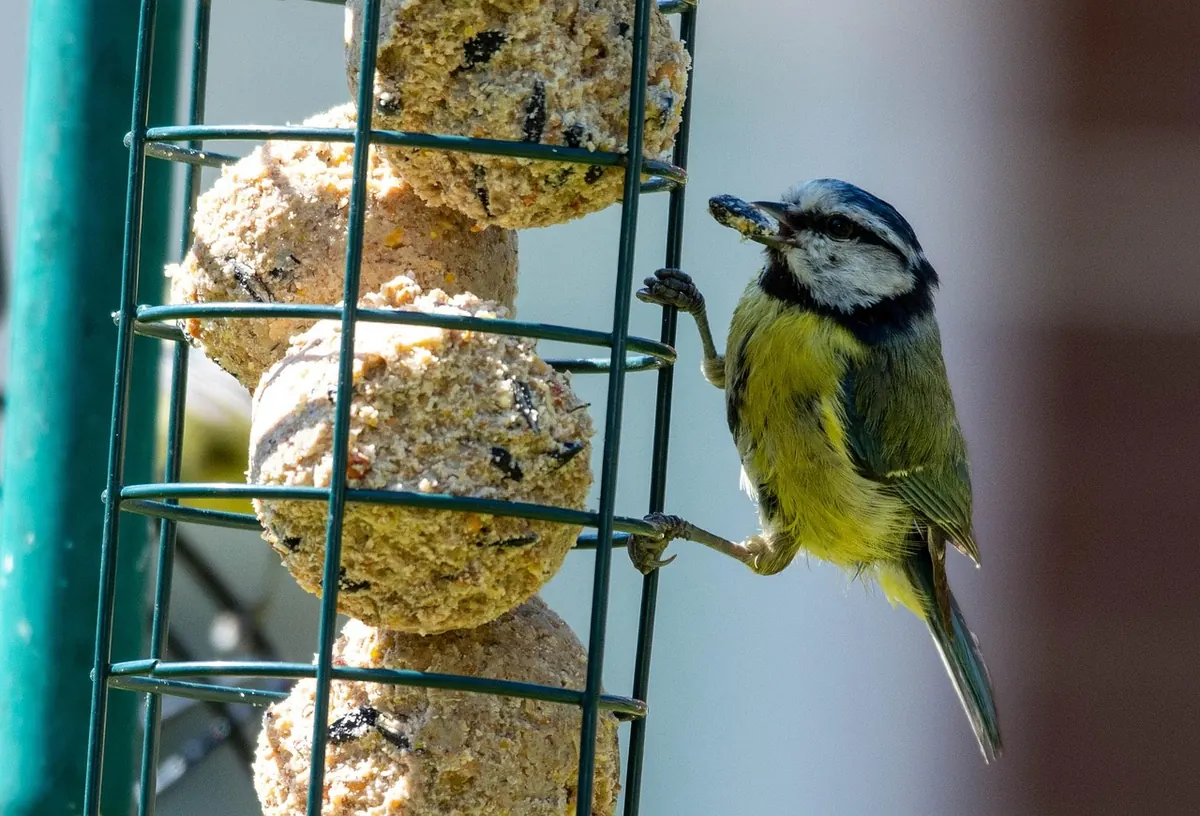
- Blue tit. Sight: blue cap and wings, yellow belly, white cheeks, small and acrobatic. Sound: a rapid tsee-tsee-tsee and a scolding churr.
- Great tit. Sight: larger than a blue tit, black head, white cheeks, yellow belly with a black stripe. Sound: a clear two-note teacher-teacher, plus many variations.
- Chaffinch. Sight: male has a pinkish breast, grey-blue cap and white wing bars; female is browner. Sound: a cheerful descending song ending in a flourish; a sharp pink call.
- Goldfinch. Sight: red face, black and white wings with a yellow bar, fine pointed bill. Sound: liquid twittering and a tinkling flight call.
- House sparrow. Sight: brown and grey, stubby bill, noisy and sociable; male has a grey crown and black bib. Sound: simple cheep cheep and chattering notes.
- Starling. Sight: dark, glossy, speckled in winter; pointed yellow bill in spring; short tail. Sound: chattering, whistles and mimicry of other birds and even machinery.
- Blackbird. Sight: male is black with an orange bill and eye-ring; female is brown with a paler throat. Sound: rich, fluty phrases with pauses; alarm is a loud cluck.
- Wood pigeon. Sight: large grey pigeon, white neck patch, pinkish breast, white wing bars in flight. Sound: a sleepy five-note coo, repeated.
- Collared dove. Sight: pale grey-buff, smaller than a wood pigeon, with a black half-collar on the neck. Sound: a three-note coo, often rendered as coo-COO-coo.
Listening: the garden soundscape
Sound often gives you the first clue. A blackbird singing from a rooftop at dusk is unmistakable once you know its rich, unhurried phrases. A great tit’s teacher-teacher call cuts through traffic. Robins sing in winter, when many other birds are quiet, which makes them easier to learn. Blue tits and goldfinch produce high, busy sounds that can be tricky at first; stand still and follow the noise with your eyes. Wood pigeons and collared doves are good starting points because their songs are short and repetitive. Starlings reward patience: listen for whistles, clicks and borrowed sounds. Try to learn one new call each week. Record it on your phone if that helps, but always listen to the living bird as well.
You can also use your hands to help. Cupping them behind your ears creates a simple amplifier and makes high calls easier to locate. Close your eyes for a moment and count how many different sounds you can hear. A single minute may reveal a distant crow, the thin seep of a goldfinch overhead, and the rustle of a blackbird in dry leaves. This kind of listening turns an ordinary breakfast into a small expedition.
A recording sheet for young naturalists
You do not need a complicated form. A single sheet of paper and a pencil are enough. Set out columns like this:
Date | Time | Weather | Species | Seen or heard | How many | Notes
Use tally marks for counts, and write a word or two about what the bird was doing: feeding on the lawn, singing from the fence, chasing another bird. Younger naturalists can draw a quick sketch of the bird’s shape and note the colours later, when the bird has flown. Keep the sheet on a windowsill or by the back door, and fill it in as you eat breakfast. After a month, you will have a small map of your garden’s daily life: which species arrive first, which feed together, and which disappear when the weather changes.
Common confusion pairs
Some garden birds look alike at first glance, especially when they are moving quickly or partly hidden. Learning a few key differences will save you from false identifications.
- House sparrow or dunnock? House sparrows are chunky, noisy and usually in groups. Dunnocks are slimmer, quieter, and shuffle along the ground with a nervous, creeping motion. A dunnock’s bill is fine and pointed; a sparrow’s is thicker and seed-cracking.
- Blue tit or great tit? Blue tits are tiny, with a blue cap and white cheeks. Great tits are noticeably larger, with a black head, white cheeks, and a bold black stripe down the belly. The great tit’s voice is lower and more forceful.
- Wood pigeon or collared dove? Wood pigeons are much bulkier, with a white neck patch and white wing bars in flight. Collared doves are pale, slender, and show a neat black half-collar. Their songs are also different: five sleepy notes for the wood pigeon, three for the collared dove.
- Starling or blackbird? Male blackbirds are matte black with a bright orange bill and eye-ring. Starlings look glossy and speckled, with shorter tails and pointed yellow bills in spring. Starlings usually arrive in noisy flocks; blackbirds are more often solitary or in pairs.
Watching through the seasons
Garden birdwatching changes month by month. The species you see in January may not be the ones you see in June, and the behaviour you observe can shift with food, weather and breeding demands.
- Winter. This is often the busiest time at feeders. Mixed flocks of tits, goldfinches and sparrows may visit together. Robins sing to defend territories, and redwings or fieldfares sometimes appear in cold spells, especially where berries remain.
- Spring. Birds pair up and sing more intensely. Blackbirds, robins and great tits become vocal at dawn. You may see nest-building, courtship feeding, or squabbles over the best nest box. Blue tits begin inspecting holes and crevices.
- Summer. Adults bring fledglings to feeders and lawns. Young starlings are brown-grey and noisy, following their parents and begging loudly. House sparrows may gather dust or bathe in shallow water. Keep feeders clean, as warm weather can spread disease.
- Autumn. Many birds form larger groups again. Goldfinches cluster on seed heads, and wood pigeons gather on stubble or lawns. Some summer visitors leave, while winter thrushes and other birds arrive. It is a good time to watch feeding flocks move through hedges.
Start with one bird you see often, learn its shape, call and habits, and then add another. Before long, the garden will no longer seem quiet. It will sound like a conversation you are finally beginning to understand.
Photo: Unders78 / Pixabay